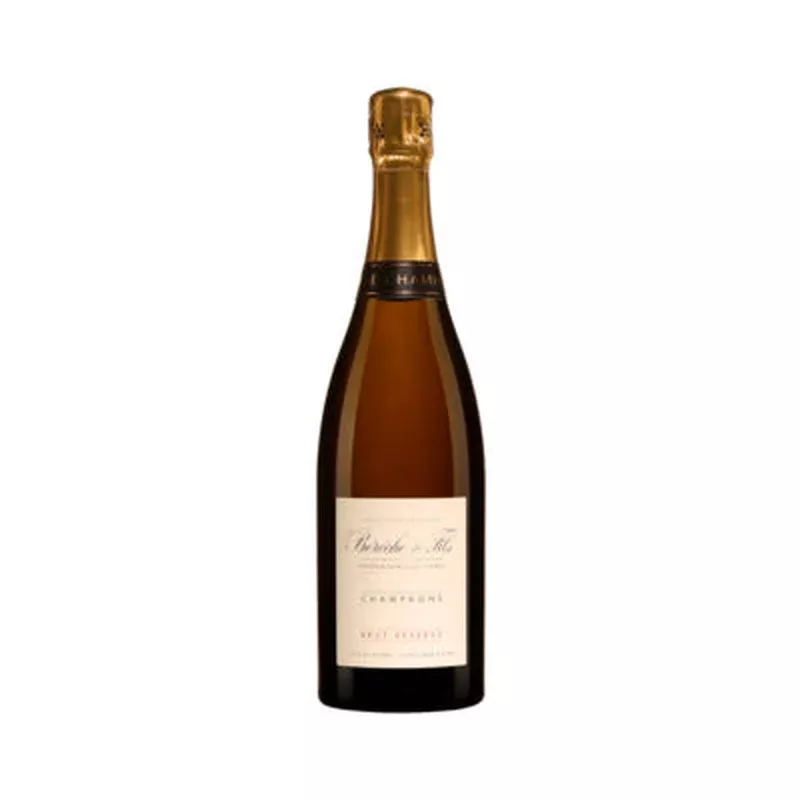
This old domaine was founded in 1847. Yet, it has been the innovative work of Raphael and Vincent Bereche that has made this one of the most talked about Champagne houses.
Building on a strong foundation of traditional Champagne making learned from their father Jean-Pierre, the brothers became two of the regions most insatiably curious vignerons. Their portfolio not only includes an extraordinarily vibrant NV Brut Reserve, but several micro-cuvees brilliantly conceived to express different aspects of terroir, vintage, and grape variety.
Key to the fantastic complexity of the Bereche Champagnes are the number of different terroirs that make up the estates holdings. Their holdings can be found, for example, in their home village of Ludes on the chalky Montagne de Reims, in Ormes, in the Petite Montagne de Reims and Mareuil le Port, in the western Vallee de la Marne. These are augmented by small plots in Trepail on the eastern slope of the Montagne de Reims, from 2012, the estates first Grand Cru site, a tiny parcel in Mailly and in 2013 a half-hectare in Rilly la Montagne, just west of Ludes. Apart from the Brut Reserve, Raphael and Vincent experiment tirelessly with the character of these very different terroirs, creating a range of cuvees prized for their originality.
To ensure that the soil and, consequently the fruit, is as healthy as possible, Brche stopped all use of chemical herbicides in 2003, returning to manual working of their vineyards, and are currently moving toward biodynamic farming in all their parcels.
Ten full-time employees tend the vines, an extraordinary number given that the estates holdings are only nine hectares. This ensures that the labour-intensive farming of each site is done perfectly. And this dedication to the quality of the matire premire is enhanced by Vincents establishment of an extremely precise protocol for all vineyard work.
The Brche sites are planted in roughly equal proportions of Chardonnay, Pinot Noir and Pinot Meunier which, combined with the wide variety of terroirs, provides a great range of blending possibilities.
Raphals and Vincents skilful barrel aging and use of cork closures, rather than crown caps, for the secondary fermentation makes the most of this site-derived complexity, in a compellingly expressive, complex and refined range of cuves.